Entry No. 184 · The Raw
The Bread You Share
A Backyard Brew Story
By Ryan Khalil (R.Solace) · September 18, 2026 · 7 min read
My boys,
He wasn't supposed to stay for dinner.
He came by near the end of the day to drop something off.
I knew him, but not well. He was one of those people you see often enough to recognize the rhythm of their life without actually knowing much about it.
Usually quick.
Usually smiling.
Usually, "I'm good."
That evening he wasn't in a hurry.
I noticed because he stood near the door after the reason for his visit was already finished.
There is a particular kind of standing people do when they want to leave.
This wasn't it.
So I asked,
"You eaten?"
He gave me the answer men give when they don't want to inconvenience anyone.
"I'm good."
I wasn't asking if he was good.
I was asking if he had eaten.
So I asked again.
"Have you eaten?"
He looked toward the kitchen.
"No."
"Then sit down."
That was the entire invitation.
No preparation.
No beautiful table.
No dinner planned for company.
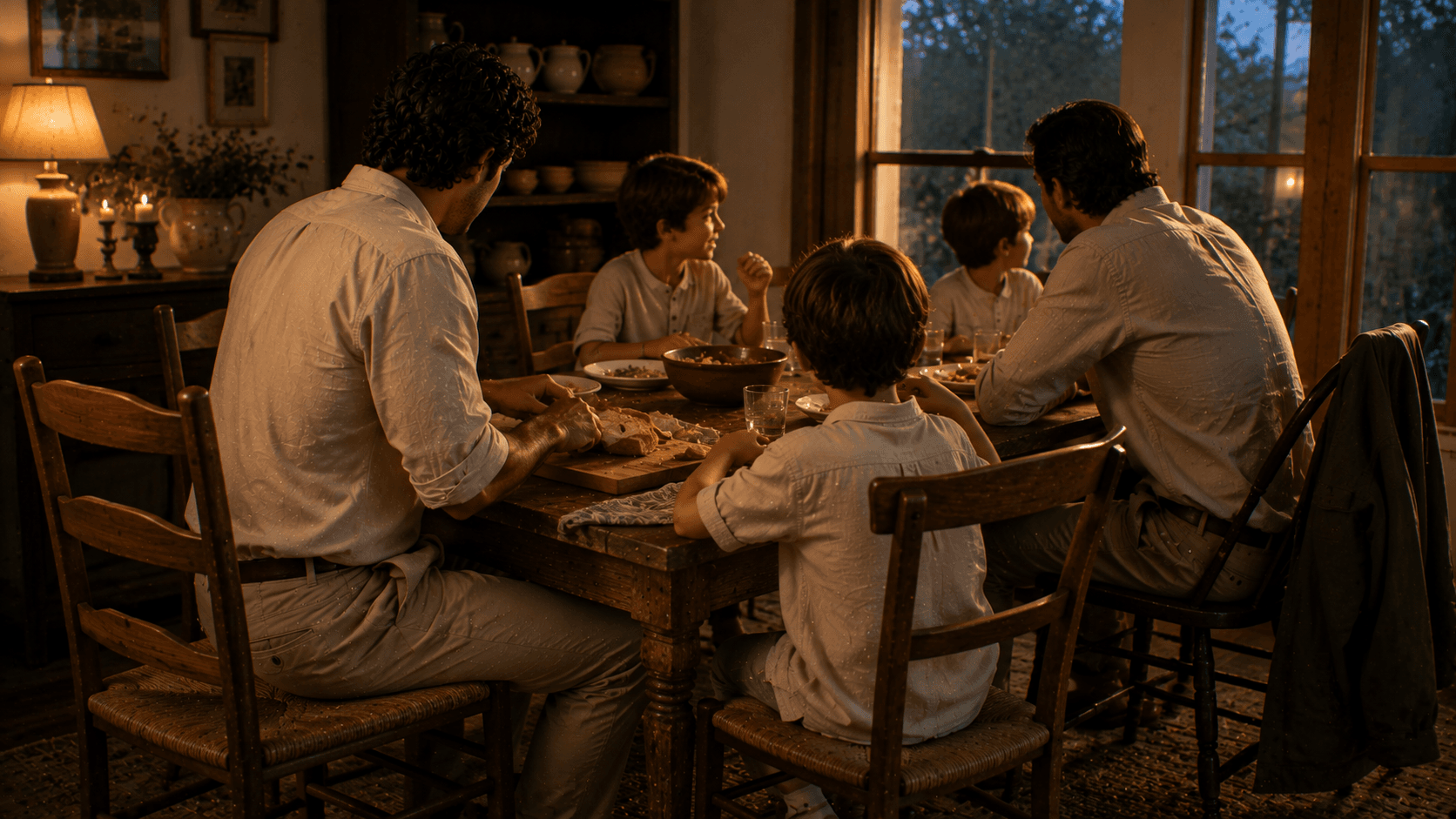
There wasn't even really enough of what we had made, so I cut the bread thinner, moved some food around, and added another chair.
You boys barely noticed.
Children are good that way.
Adults can turn hospitality into an event.
Children just make room.
Within five minutes, one of you was asking him a completely inappropriate question.
Another wanted to show him something.
Someone interrupted his answer before he finished it.
He laughed.
Not the polite laugh he arrived with.
A real one.
We ate.
He took a little food at first.
I told him there was more.
He took more.
Eventually the conversation wandered away from anything important.
Then somehow it wandered back.
He told me the house had been quiet lately.
Someone he loved was gone.
Not dead.
Just gone.
There are different ways a chair becomes empty.
He had been eating most dinners alone.
That explained the standing by the door.
I didn't have advice for him.
Thank God I realized that before offering any.
So we kept eating.
You boys kept being boys.
One of you dropped something.
Someone asked for more bread.
I got up and cut the last piece into smaller pieces so everybody could have some.
Nothing miraculous happened.
His problem was still waiting for him.
The quiet house was still his house.
The person who left was still gone.
But by the end of dinner, his shoulders looked different.
That's the only way I know how to describe it.
When he arrived, he seemed like a man carrying something carefully so nobody would notice.
When he left, he was still carrying it.
He just wasn't carrying it alone for an hour.
At the door, he thanked me.
I said,
"For what? You helped us finish dinner."
He smiled.
We both knew that wasn't what he meant.
After he left, I looked at the table.
Dirty plates.
Crumbs everywhere.
One serving dish completely empty.
Almost no bread left.
It occurred to me that I spend a lot of time thinking about having enough.
Enough money.
Enough food.
Enough time.
Enough energy.
Enough room.
But generosity has rarely begun in my life when I finally had extra.
It usually began when somebody arrived before I felt ready.
You move the plates.
You cut the bread thinner.
You pull up another chair.
And somehow there is enough.
God has fed me at other people's tables more times than I can count.
Not only with food.
With patience.
With opportunity.
With forgiveness.
With company when I didn't want to admit I needed company.
So I want our table to remember that.
A table is not full because every chair is occupied by family.
A table is full when there is still room for someone who isn't.
I love you.
— Baba
Question:
When someone arrives before you feel prepared to give, do you protect what you have or make room with it?
Moral:
Generosity does not begin with abundance. Sometimes it is simply cutting the bread a little thinner, pulling up another chair, and trusting that what God placed on your table was never meant only for you.
This story reflects real experiences and philosophies behind Backyard Brew. It is shared to inspire perspective and intention.
Author: R. Solace
This story is a real lesson learned by Ryan Khalil. AI was used to help organize and structure the stories you're reading. The intent of these stories is to help, not to hurt.
The newsletter
One idea, told well, every so often. No hype, no selling — just the work. Unsubscribe anytime.
subscribe