Entry No. 235 · The Craft
Tending the Fire
A Backyard Brew Story
By Ryan Khalil (R.Solace) · November 8, 2026 · 12 min read
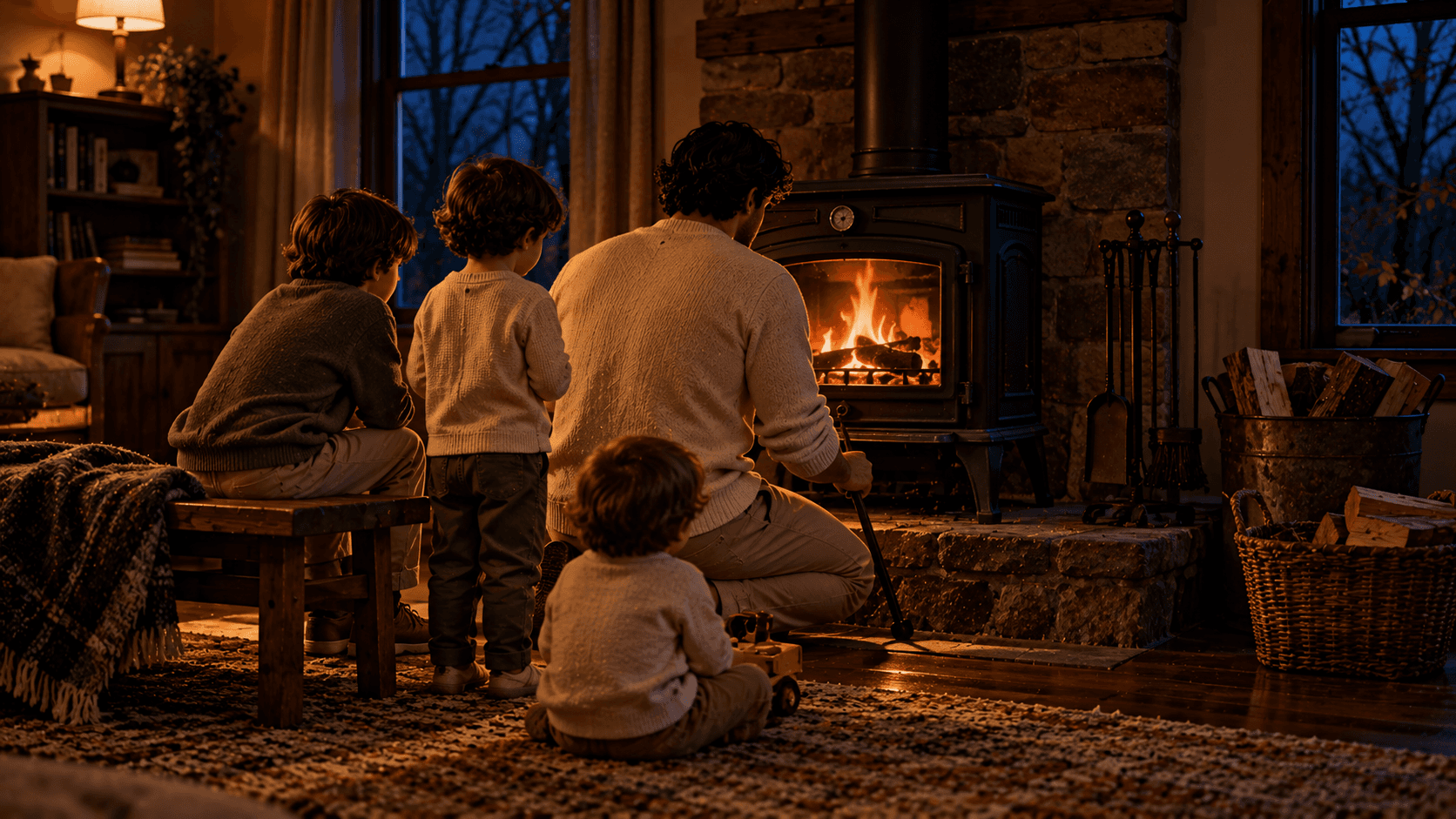
My boys,
Come here.
Before we go to bed, I want to show you something.
The fire has been burning since dinner.
The room is warm.
Most of the logs have settled into glowing embers.
You might think our work is finished.
It isn't.
Starting a fire is one thing.
Knowing how to care for it is another.
And tonight, I want to show you the difference.
- Look at the fire before you touch anything.
"Is it still burning, Baba?"
"Look closely."
You lean toward the stove, keeping a safe distance from the glass.
Beneath the gray ash, the embers glow orange.
"Yes."
"Then we don't need to start over."
That is the first lesson.
Before you begin fixing something, understand what condition it is actually in.
A relationship may look quiet without being empty.
A business may be moving slowly without being finished.
Your faith may feel less exciting than it once did without having disappeared.
Do not mistake a quieter flame for a dead one.
Sometimes what you have already built needs care, not replacement.
- Clear what needs clearing.
I point toward the ash collecting beneath the fire.
"Why don't we just leave it there?" you ask.
"Some ash belongs there. Too much can interfere with how the stove works."
I explain that the stove must be cool before we remove excess ash, and that ashes can remain dangerously hot long after a fire appears finished.
We will clean it properly another time, using the right tools and a covered metal container kept outside, away from anything combustible.
Tonight, we simply inspect it.
There is a lesson in that too.
Not everything left behind is bad.
Some of yesterday's work protects today's fire.
But eventually, what has accumulated needs attention.
Old habits.
Unnecessary obligations.
Resentments.
Things you keep carrying because you have become accustomed to their weight.
Maintenance sometimes means removing what no longer belongs.
Not angrily.
Not all at once.
Just carefully, when the time is right.
- Add only what the fire needs.
I open the stove according to its instructions, keeping you back from the heat.
The embers are still strong.
I place a suitable dry log onto them and close the door securely.
"Why only one?" you ask.
"Because we're not trying to make the biggest fire."
"Then what are we trying to do?"
"Take care of the one we have."
I want you to remember that.
More is not always better.
More work.
More money.
More commitments.
More plans.
More things to manage.
A man can overwhelm the very life he is trying to strengthen.
Learn what is needed.
Give it enough.
Then allow it to do its work.
- Pay attention to the air.
You notice the flame responding as the stove's air controls are adjusted within the manufacturer's safe operating range.
"Why did it change?"
"Because fire needs air."
I explain that a wood stove must have enough airflow to burn properly and vent smoke safely.
We never close the damper or starve the fire of air simply to make the wood last longer.
That can create dangerous smoke and carbon monoxide.
And I tell you something else.
People need room to breathe too.
You cannot demand constant effort from yourself and expect to remain healthy.
You cannot fill every hour and call it discipline.
You cannot control everyone around you and expect them to flourish.
Sometimes the thing you are responsible for needs space.
A little rest.
A little freedom.
A little trust.
Not neglect.
Room.
- Check the things that protect the house.
Before leaving the stove, I check that its door is securely latched and that the area around it is clear.
No paper.
No loose clothing.
No firewood too close to the heat.
The smoke and carbon monoxide alarms are working, and the stove and chimney are maintained as they should be.
"Why do you check all that?" you ask.
"Because a good fire belongs inside a safe stove."
Strength without boundaries can become dangerous.
Ambition without restraint can damage a family.
Confidence without humility can become arrogance.
Even love, when it refuses to respect another person's limits, can become something it was never meant to be.
The boundaries are not there to destroy the fire.
They allow us to enjoy its warmth safely.
- Know when to stop tending.
The stove is operating safely.
The door is closed.
The fire is settled.
I put the tools away.
"Are we done now?"
"For tonight."
"Will the fire still be there tomorrow?"
"Maybe there will be embers. Maybe we'll need to start a new fire."
You look disappointed.
"But we just worked on it."
I smile.
"I know."
And here is the part I most want you to understand.
Maintenance is not a guarantee that nothing will ever need rebuilding.
You can care for something faithfully and still find that circumstances change.
You can do the right things and still face difficulty.
You can prepare carefully and still wake up to an unexpected problem.
Discipline does not give us control over every outcome.
It gives us a better way to meet what comes.
We do not sacrifice safety trying to keep a fire alive all night. We follow the stove's instructions, maintain proper ventilation, and allow the fire to burn down when that is the safer choice.
Tomorrow, if it needs relighting, we will relight it.
There is no shame in beginning again.
My boys,
I used to think discipline meant pushing harder.
Another hour.
Another task.
Another effort.
Another log thrown onto a fire that was already burning well enough.
I am learning something different.
Discipline is also knowing when to tend.
When to clear.
When to add.
When to adjust.
When to protect.
And when to leave something alone.
The greatest things you build will require more maintenance than celebration.
Your health.
Your marriage.
Your family.
Your faith.
Your character.
Your work.
None of them will remain strong because you gave them one extraordinary day.
They will remain strong because you return to them.
Again.
And again.
Especially when nobody is watching.
Especially when the work is ordinary.
Especially when there is nothing exciting about doing it.
Tonight, the room is warm.
The stove is safe.
The tools are put away.
And you are standing beside me, looking through the glass at the last steady flames.
"Come on," I say.
"Time for bed."
You look back once more.
"Baba?"
"Yeah?"
"Tomorrow, can I help again?"
I smile.
"That's how you learn."
I love you.
— Baba
Question:
What important part of your life have you been trying to improve through occasional big efforts when it actually needs small, consistent care?
Moral:
Discipline is not one great act of effort. It is the quiet practice of maintaining what matters—giving it what it needs, removing what harms it, respecting its limits, and returning to care for it again tomorrow.
This story reflects real experiences and philosophies behind Backyard Brew. It is shared to preserve perspective, discipline, stewardship, fatherhood, faith, and intention. Wood-stove operation and ash handling should always follow the appliance manufacturer's instructions and appropriate fire-safety guidance.
Author: R. Solace
Pass it on
This story is a real lesson learned by Ryan Khalil. AI was used to help organize and structure the stories you're reading. The intent of these stories is to help, not to hurt.
The newsletter
One idea, told well, every so often. No hype, no selling — just the work. Unsubscribe anytime.
subscribe