Retold · after Tawfiq al-Hakim
The River of Madness
Retold by R.Solace — after the one-act play by Tawfiq al-Hakim (1937)
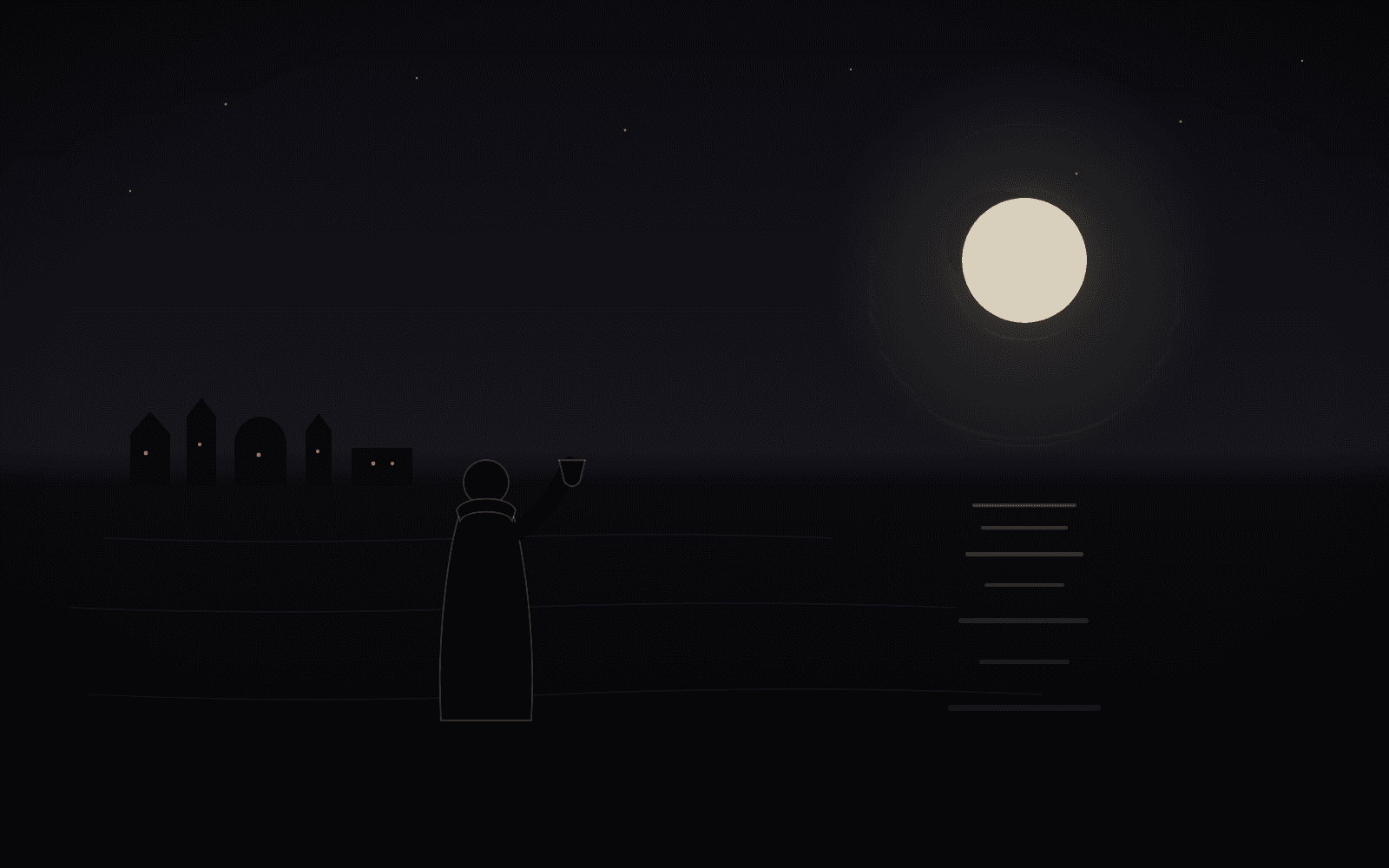
There was a kingdom with one river. Everything drank from it — the fields, the cattle, the people, the palace. The river was the kingdom's blood.
One night, a warning came to the king in his sleep: at dawn the water would turn. Not into poison that kills — into poison that keeps you alive and takes your mind. Whoever drank from the river would go mad, and would never know it.
The king woke up and believed. He sealed his own cup. He ordered the queen, the vizier, and the whole inner court: touch nothing from the river. Live on wine if you must. But do not drink the water.
A dream is a thin wall against thirst.
The queen drank first — quietly, maybe not believing, maybe just thirsty. The court followed. Then the city. Then the countryside. By the time the sun was high, the entire kingdom had drunk from the river.
Everyone except two men: the king, and his vizier.
Here is the trick of the river. Madness in one man is obvious. Madness in everyone looks like Tuesday. The people still baked bread, still argued over prices, still married and buried each other. Their minds had all shifted together, so nothing seemed to have moved at all. They were mad in unison — which is to say, they agreed.
The king began asking after his great men, one name at a time.
"The chief judge?"
"He drank, my lord."
"The general?"
"Drank."
"The high priest. The treasurer. The physicians."
"All of them. There is no one left."
"...The queen?"
The vizier lowered his eyes. That was the answer.
Then the whisper started.
Because from inside the water, the picture was reversed. To the people, they were fine — it was the king who had changed. He spoke strangely. He refused what everyone drank. He kept himself apart. So the whisper said: the king has lost his mind. The whisper grew into a voice, and the voice into a crowd, and the crowd began to say what crowds eventually say: a mad king cannot keep a throne.
The king turned to the last sane man beside him.
"But we know the truth. Reason is with us."
And the vizier gave the answer that is the knife of this story:
"Truth. Reason. Right. Those are words, my lord — and words belong to whoever there are more of. The people own them now. You and I hold reason the way a beggar holds the deed to a palace he can never enter. What is a mind worth, when the only thing it buys you is exile?"
The king was silent for a long time.
Then: "Tell me — where is the line between reason and madness?"
The vizier opened his mouth. He was a learned man. He had spent his whole life drawing lines. He could not find this one.
"Neither can I," said the king. "Bring me a cup from the river."
He drank. The vizier drank after him.
And the kingdom erupted in joy — because their beloved king had finally come back to his senses.
The river ran on, same as ever. From that day the kingdom was whole, at peace, and everyone in it was of perfectly sound mind. Because madness, once everyone shares it, gets a new name.
هذه صياغة عربية لإعادة السرد التي كتبتها R.Solace، وليست نصَّ توفيق الحكيم الأصلي. النص الأصلي متاح مجانًا عبر مؤسسة هنداوي (الرابط في أسفل الصفحة).
كانت هناك مملكةٌ لها نهرٌ واحد. منه يشرب الزرعُ والماشيةُ والناسُ والقصر. كان النهر دمَ المملكة.
وذات ليلة، جاء الملكَ نذيرٌ في منامه: عند الفجر سيتبدّل الماء. لا إلى سمٍّ يقتل، بل إلى سمٍّ يُبقيك حيًّا ويسلبك عقلك. من شرب من النهر جُنَّ، ولن يدري أبدًا أنه جُنّ.
استيقظ الملك وصدّق. ختم كأسه، وأمر الملكةَ والوزيرَ وخاصّةَ البلاط: لا تمسّوا ماء النهر. عيشوا على النبيذ إن اضطررتم. لكن لا تشربوا الماء.
غير أنّ الحلم جدارٌ رقيقٌ أمام العطش.
شربت الملكة أولًا — في صمت؛ ربما لم تصدّق، وربما فقط عطشت. ثم تبعها البلاط، فالمدينة، فالأرياف. وقبل أن تتوسّط الشمسُ السماء، كانت المملكة كلها قد شربت من النهر.
الجميع إلا رجلين: الملك ووزيره.
وهنا حيلةُ النهر: الجنون في رجلٍ واحد فضيحة، أما الجنون في الجميع فيبدو يومًا عاديًا. ظلّ الناس يخبزون خبزهم، ويتشاجرون على الأسعار، ويتزوجون ويدفنون موتاهم. تحرّكت عقولهم كلها معًا، فبدا كأنّ شيئًا لم يتحرّك. جُنّوا بصوتٍ واحد — أي: اتفقوا.
وراح الملك يسأل عن كبار رجاله، اسمًا اسمًا.
«قاضي القضاة؟»
«شرب يا مولاي.»
«قائد الجيش؟»
«شرب.»
«الكاهن الأكبر. أمين الخزانة. الأطباء.»
«كلهم. لم يبقَ أحد.»
«...والملكة؟»
أطرق الوزير. وكان ذلك هو الجواب.
ثم بدأت الهمسة.
فمن داخل الماء تنقلب الصورة. الناس في أعين أنفسهم بخير — الملك هو الذي تغيّر. صار يتكلم غريبًا، ويرفض ما يشربه الجميع، ويعتزلهم. فقالت الهمسة: الملك فقد عقله. وكبرت الهمسةُ صوتًا، والصوتُ جمعًا، وقال الجمعُ ما تقوله الجموع في النهاية: ملكٌ مجنون لا يليق به عرش.
التفت الملك إلى آخر عاقلٍ بقي إلى جواره:
«لكننا نعرف الحقيقة. العقل معنا.»
فأجابه الوزير الجوابَ الذي هو سكّينُ هذه الحكاية:
«الحقيقة. العقل. الصواب. كلماتٌ يا مولاي — والكلمات ملكُ مَن كانوا أكثر. صارت اليوم في يد الناس. أنت وأنا نمسك بالعقل كما يمسك شحّاذٌ بصكِّ قصرٍ لن يدخله أبدًا. ماذا يساوي عقلٌ لا يشتري لصاحبه إلا المنفى؟»
صمت الملك طويلًا.
ثم قال: «قل لي — أين الحدُّ بين العقل والجنون؟»
فتح الوزير فمه. وكان رجلًا عالمًا قضى عمره في رسم الحدود. فلم يجد هذا الحدّ.
قال الملك: «ولا أنا أجده. هاتِ لي كأسًا من النهر.»
فشرب. وشرب الوزير من بعده.
وضجّت المملكة فرحًا — فقد عاد مليكُهم الحبيب أخيرًا إلى رشده.
وجرى النهر كما كان يجري. ومن ذلك اليوم صارت المملكة موحّدةً، آمنةً، وكلُّ من فيها راجحُ العقل تمامًا. لأن الجنون، حين يتقاسمه الجميع، يأخذ اسمًا جديدًا.
Why this story
Al-Hakim doesn't hand you a hero. That's the point. The king doesn't die for the truth — he does the math. Sanity that costs you every human connection isn't livable, and he drinks. The play never tells you whether he's a coward or just human. It leaves that knife in your hand.
What it argues is harder than "the majority can be wrong." It argues that sane isn't a fact you hold alone — it's a verdict the crowd passes on you. Whoever has the numbers owns the words: truth, reason, right. Being correct in isolation doesn't feel like victory. It feels like illness.
And the cruelest detail: what finally breaks the king isn't fear of losing the throne. It's loneliness. The river's real power was never the poison. It was the company.
Nobody in the story thinks they drank. So the question "am I sane?" is useless — every madman in that kingdom answered yes. The only question with teeth is: what have I swallowed just to belong? Which rivers — the industry, the feed, the circle, the old family stories — did I drink from without ever actually deciding to?
You don't have to end the story the way the king did. But you don't get to pretend the thirst isn't real.
Original work: Nahr al-Junūn (نهر الجنون — "The River of Madness"), a one-act play by the Egyptian writer Tawfiq al-Hakim (1898–1987), widely regarded as the father of modern Arab theater. Published in his 1937 collection Masrahiyat ("Plays") and later translated into English as The River of Madness.
Lineage: al-Hakim was dramatizing a motif older than the play — the "water of madness" parable runs through the region's storytelling, including Kahlil Gibran's short piece "The Wise King" (The Madman, 1918). Al-Hakim's version is its definitive stage treatment.
About this text: This is an original retelling in English and Arabic. The plot and its meaning belong to al-Hakim; the wording is R.Solace's. It is not a translation, and no lines from the play or its translations are reproduced.
After "The River of Madness" (Nahr al-Junūn) by Tawfiq al-Hakim, 1937.
Read the original. Al-Hakim's full Arabic text is available free from the Hindawi Foundation: hindawi.org.
An original retelling by R.Solace. The plot and meaning belong to Tawfiq al-Hakim; the wording is R.Solace's. No lines from the play or its translations are reproduced. More from Tawfiq al-Hakim →
The newsletter
One idea, told well, every so often. No hype, no selling — just the work. Unsubscribe anytime.
subscribe